Logo

Logo

Saturday, 16 March 2019

Defining My Weirdness 2: Sequel Title


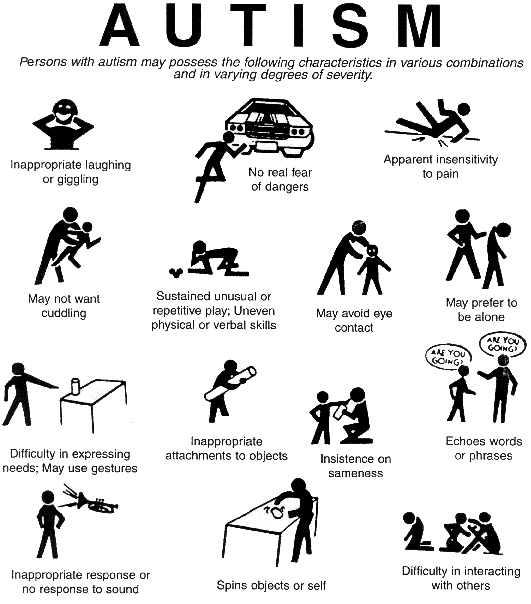
Image may contain: text

Introduction

Sooo funny story. I initially wanted to do this on my Facebook page but there is WAY too much to unpack here so I thought I'd do it on this so it looks professional and stuff.

Now as you may or may not know, I did something like this already hence the sequel title but seeing as this is a brand-spanking new list, I thought it would be fun to address it in a fun list with headings and everything! What I usually do with these is go through them and see which ones I fit into and how. Like last time, this sort of thing will explain my weird behaviour to those of you who know me.

Anyway, ON WITH THE SHOW!!!!!!!

The Long List of I-Can't-Find-a-Synonym-For-Symptoms-Beginning-With-L

Social Signs

  • May feel like you become whoever you're around most - I can be easily influenced so that's true for me.
  • May constantly rehearse conversations or interactions - Very true both before and after the conversation which is weird because I end up winging it anyway. 
  • May feel as though you are always on stage - This is rather literal in my case as I love me some theatre but figuratively, not really. 
  • May have a few close friends but not many acquaintances - This rather depends... at secondary school and outside of uni this is very much the case and I prefer it that way but at uni, I have many acquaintances but they're less close to me.
  • May see the world literally and in black and white - There have been times where I took the world literally but I see everyone as capable of having good and evil in them so I don't think the world is as black and white. Plus, it's very colourful (when British weather decides to act uncharacteristically nice)
  • May struggle with other people breaking rules - Oh my gosh yes! I hate getting into trouble and I will have no part in rule breaking. Also, never offer to play Grand Theft Auto with me... I will panic...

Sensory Signs

  • May be a very picky eater with few preferred foods - I've gotten more open-minded these days (though for some reason, vegetables are my kryptonite) but once upon a time I was so bad, my mum had to write the days of the week on bananas to get me to eat them.
  • May struggle with noises, touching or sensory input - Loud noises can cause me to get so distressed, I have to go to quiet rooms to calm down. It's the reason I'm terrified of balloons, fire alarms and jump scares. I'm quite weird with touching as I'm okay with it but only if a) they verbally consent for me to do so and b) they do it to me. I will say that I have a big personal bubble that I don't always feel comfortable popping. Things like hugging and hand-holding I'm okay with but more intimate things like kissing I am way more careful with (my stance on sexual contact is TBC atm) As for the other sensory inputs, certain noises like loud chewing/swallowing, keyboard clacking and whispering drives me up the wall and texture is the primary reason why I'm not a fruit guy. 
  • May seek out squeezing hugs when worried or upset - Yup, I'm a hugger. I even offer hugs to other people who are worried or upset.
  • May chew, rub or tap certain materials obsessively - This is very true for me. I always fiddle or chew on something instinctively. My personal favourite fiddling device is blu-tack.
  • May struggle to process visual or auditory information - Mostly auditory and I think it's an attention thing. It's the reason why I watch movies with subtitles. 
  • May struggle to settle body down enough for restful sleep - Sometimes true. Sometimes I struggle to get to sleep, other times I sleep like a log. It's rather inconsistent.

Behavioural Signs

  • May often fidget, chew, tap or other repetitive behaviours - See above. I also tend to rock a lot or shake my right knee. 
  • May get more or less upset at something that is "appropriate" - I have no idea what this means... do they mean sex? If so, I'm probably leaning towards more but I usually act flustered more than anything... yeah I'm out. I have no idea what this means.
  • May be very involved in specific hobbies and interests - My hobbies are very creatively-based so things like writing and theatre (sometimes both) are my top hobbies. As for interests... diddly-dum, diddly-dum, diddly-dum, diddly-dum...
  • May struggle to adjust to when plans change without warning - Yes! Always tell me what the plan is in advance! I especially hate it when people cancel last minute.
  • May have routines that don't seem to have a real purpose - Yes. For example, I go through Doctor Who plotlines in my head. I'm a living synopsis machine.
  • May struggle in situations that are unfamiliar - Even if it means going to an unfamiliar place, this is true. I can struggle to adapt to my new surroundings. It can take a couple of days for me to do so.

Communication Signs

  • May experience pain or discomfort during eye contact - File that under discomfort. I don't tend to look into people's eyes or even faces sometimes.
  • May struggle to keep track of a fast conversation - Yes. My brain can only go so fast people!
  • May take jokes very literally and not understand teasing - I'm mostly good with jokes and puns but teasing... I still get very wound up when people tease me and they have to clarify that is exactly what they're doing.
  • May miss sarcasm and subtleties while others are speaking - Not severe with sarcasm but it can happen but I'm also rubbish at reading people. I think that's why I'm single the more I think about it...
  • May prefer to communicate via text or email - I certainly prefer that to speak on the phone!!! I'm perfectly fine speaking with people face-to-face though! In fact, I prefer it because it gives me a better idea as to what they're like.
  • May not understand why blunt honesty can be seen as rude - Yeah my brain-to-mouth filter isn't the best and whilst it has been helpful, as people can trust my opinion, it has gotten me into trouble multiple times.

Conclusion

Aaaaaaaand that's it! Like before, I hope this gives you an insight into what goes on in my brain. And remember, not everyone experiences these symptoms and some could affect them more severely than others. If you've met one person with autism, you've met one person with autism. This is just an insight as to how it affects me in particular.

If you're autistic and you're reading this, how accurate are these to you? And if you're neurotypical, does this at least explain why I'm like this?

Sound off below and be sure to like my Facebook page Joel Mole for memes and updates. I welcome suggestions for future posts like these! Until then, fare thee well good people of the internet.

Image result for i like being weird weird's all i got

Friday, 8 February 2019

Alita: Battle Angel - A lesson on pushing your opinions, beliefs and products

Image result for alita battle angel

Introduction

For those of who you don't know, Alita: Battle Angel (currently in cinemas at the time of writing) is about a cyborg who learns more about her past as she takes part in a dangerous sport. With its stunning visuals, an interesting sounding main character and prolific director, Robert Rodriguez, at the helm, I should be excited about this.

But I'm not excited for one reason: it's overly-advertised. Everywhere I go, especially now, I see nothing but Alita: Battle Angel. Be they in cinemas or online, Alita: Battle Angel has been advertised to death and quite frankly, I'm sick of it. And that's before I even seen the film.

Why is that? Why did a film that piqued my interest cause me to turn against it so quickly before I've even seen it? 

That's when I realised: this is the perfect example of how not to get people to see your product. In this post, I will explore several examples of how pushing people to see your movie or join your organisation will do exactly that: push.

Main Thingy

So the earliest example of pushing something beyond breaking point, at least for me, is Disney's Frozen. It was a massive hit with both audiences and critics and it generated over $1 billion dollars at the box office. And for good reason, it is a solid film with great characters, beautiful animations, one or two great songs and a fantastic moral about how true love is familial love, not necessarily romantic love.

Sadly, Disney caught on to its success and suddenly it was everywhere. For a while, you couldn't go anywhere without hearing 'Let it Go,' nor could you go anywhere without Frozen merchandise being shoved in your face. They even put unnecessary short films before other Disney films! It got so ludicrous that I actually started to forget why I even liked that film and I just became sick of it.

And as a result, pretty much everyone became sick of Frozen. I'm not even sure how much money the upcoming Frozen 2 will make.

But it doesn't stop there with Disney but with this example, it's not Disney's fault. Enter The Lion King, which I have to say is overrated. True it has stunning animation and a great villain but the main character is an obnoxious brat, the story is fine but it doesn't stand out to me, it's unfunny and the songs... not a fan...

But the main reason why I don't like The Lion King is that everyone won't shut up about its greatness, to the point where they denounce anyone who says they didn't like it. Because of this, it got shoved in my face and now I'm sick of it.

Then there's Netflix's Stranger Things. I have yet to see this show because, once again, it gets everywhere. Everyone wouldn't stop raving about it and everyone I talked to about it freaked out when I mentioned I haven't seen it. Now I won't watch it because I'm afraid I'll be underwhelmed. Ditto with Game of Thrones.

On that regard, I've been fairly guilty myself. I tell everyone I meet to read/watch Doctor Who, Star Wars, and Harry Potter if they haven't done so. So I guess I can't be too mad. But then again, as surprising as it is for you to hear, I don't jabber on about these as much as I want to because I know people would get sick of me. Heck, I get sick of me sometimes!

But okay, that's for movies. Everyone is entitled to their opinion even if I don't share it and at the end of the day, that's inconsequential. But sadly this applies to things like politics and religion.

A bit of background: For starters, I am apolitical. I believe that all political parties in the UK are out of touch with the people and don't have much of an idea what they're doing. If I had to vote, I'd say Labour because they make the most sense but even then, they're not perfect. But honestly, if voting wasn't that important to the lives of everyone in my country, I wouldn't do it. Not just because British politics is basically a joke these days but because everyone I know and know of would not stop shoving their political views down everyone's throats. And guess what, more often than not, it would cause arguments as people were more pushed apart then drawn together. And don't get me started on the kind of divide Brexit caused! I understand that politics make people angry but when you share your anger, people will only get angry in return. That's why I stayed out of this, to keep a positive aura around everyone I know.

And don't think political correctness and social justice warriors are free from this too. Yes, I get that you want to make positive changes and I admire you guys for that but can you do it in a way that doesn't make you come across as 'I'm better than you!' It'll just annoy people. Same with the anti-SJWs: you're just as annoying as the thing you're against and I cannot take your opinions seriously if they aren't even there.

And sadly, religion is no stranger to this. Now, as I mentioned in my last post I am a Christian. But I have to admit that part of the reason why I wasn't for a while was that my Christian friends wouldn't talk about anything else. They came across as weird to me because they came across as obsessed. I ultimately chose Christianity on my own terms because I was in a dark place and Jesus helped me out. And I know shoving Christianity down people's throats doesn't work because I tried that. In a fit of enthusiasm, I tried forcing my atheist friend to come with me and, unsurprisingly, she didn't take it well. We nearly fell out because of it and I learned that if I were to get people to become a Christian, I must let them do it on their terms and I must respect their views until they want to change it.

It's a lesson some Christians need to learn because it's getting dangerous. Now, unfortunately, I have to begrudgingly agree with the Bible's questionable views on the LGBT+ community but only because I believe that the Christian approach is to let them change on their own terms, not ours (if that's even possible). But apparently, some morons don't believe that and we have the ex-gay groups and, most horrifyingly, gay conversion therapy, both of which force LGBT+ people to turn straight with damaging results. I do hope they're just an extreme minority because that is messed up and is the ultimate example as to how forcing your views on other people is a bad, bad idea. No wonder non-Christians mock us! We must come across as raving lunatics if this is how we spread the word.

Granted, it's not like other religions are much better. Atheists are laughably hypocritical by condemning Christians for forcing their views only to force their own views down people's throats. Then there are terrorists like ISIS and Al Queda who fail to realise that killing people isn't going to make us like them.

Conclusion

Okay, I could go on and on (I haven't even mentioned vegans and opinionated fans) but that would be defeating my objective. What's the point of all this? 

Basically, if you push something, be they an opinion, a belief or a piece of entertainment, you will do exactly that: you will push people away. What you should do instead is that you should say your piece and let people decide for themselves. If they disagree with you, respect their decision and move on with your life. 

As for Alita: Battle Angel, if they cut back on their advertising I would've seen the movie because I made that decision on my own. But sadly, the movie pushed it too far and now I'm dreading it. 

Now I may have just come across as a hypocrite seeing how much of a rant this was so I'll leave it up to you. Did I make a good point or is there actually merit to pushing an opinion? Or do you just not care about this? Leave your thoughts on the comments below both on here and my Facebook page 'Joel Mole' and always, leave your suggestions on what I should talk about next. Until then, fare thee well good people of the internet!

Image result for opinion memes

Saturday, 2 February 2019

Why I'm a Christian - A discussion on how Christianity changed me for the better

Warning: This post involves the topics of faith and religion. If you get offended by such things, I suggest you click away now. If you want to hear me out, please respect my views and opinions. I also get pretty personal here including some confessions that I wasn't that great of a person in the past. Don't worry, I'm trying to get better for the reasons I'm about to say. I just thought I should warn you.

Image result for christian memes
Yes, I like Christian memes. It's good to laugh at ourselves so long as it doesn't come with loathing.

Introduction


Sooooo... this isn't going to stir controversy at all isn't it... heh...

Hopefully, the fact that I have a small fanbase will mean that I have a respectful one, at least one who is willing to hear me out.

Besides, it'll be interesting to talk about faith because I feel like it's one thing that both people with autism and neurotypical people have in common. Everyone believes in something be it a religion or faith in other people. I just so happen to put my faith in the Lord and his son Jesus. And I thought I'd explain my faith in the hopes of showing that a) Christians aren't as bad as their reputation suggests and b) to provide context behind any future views since this will play a big part.


The Interesting Bit

So a bit of background: I was raised as a Christian. Both of my parents are strong Christians though they practised their faith in their own ways. As for me, I went along to church with my Dad and sometimes my mum depending on who had me that weekend (it's complicated). As a kid, I was okay with it but like most kids, I wasn't that connected with God. I just enjoyed Sunday School and VeggieTales (shout out to those who have watched it!). 

Then things became complicated when I permanently moved in with my Mum (again complicated) and though we tried different vineyard churches, my mum presumably never found one she liked and we simply stopped going. 

Eventually, I found a church of my own with my now former stepdad (see the above parentheses), a Baptist church in my home town. It was then I became interested in finding out about God and I started to attend the actual services. There was just one problem: I wasn't very good at paying attention to it. I became worried at this point. I feared that I wasn't close to God. 

So at the age of 15, I decided to get baptised, hoping that this would help me out. Though I'm glad I did it, it didn't help. Eventually. I grew sick of not paying attention and I eventually left that church. I didn't return to church save for a few occasions for about four years. 

Then my lack of faith got worse. For starters, one of the seven deadly sins, lust, took over my brain. I got desperate for a relationship, sex in particular, and it has led me to some embarrassing situations I would rather not get into. This was partly because of my inability to deal with puberty but it was also out of loneliness and peer pressure. A lot of people I knew were having sex and being in relationships and I felt left behind. And despite people telling me that relationships don't matter, I didn't listen. In fact, it didn't get through to me until recently (and even now I can't help developing feelings for people, even if I am self-aware and more cautious). As a result, I am rightfully still a virgin because of said desperation.

But it's not just that, in 2017, I began to question the Christian religion itself. I became worried that I was wrong all along, my Christian friends were starting to come across as weird to me and my agnostic/atheist friends and even some family members weren't helping. It also didn't help that I found out that Christians are, shall we say, disapproving of the LGBT community with some willing to force said community to become straight through any means necessary. Now I'm not LGBT. With the exception of having a man crush on Ryan Gosling and Arthur Darvill, I have always preferred women and that ain't gonna change any time soon. But the idea of forcing people to change against my will just rubs me up the wrong way. Maybe it's because some people feel the same way about autism (*Cough* Autism Speaks *Cough*) that I find myself relating to them in some way.

I tried searching for other faiths (well Buddhism) but it didn't go anywhere. Eventually, I fell into a form of depression (well I think... I was never diagnosed because I was and still am afraid it would make it real) because I felt lonely and rejected from society and I became self-conscious with the belief that people, particularly women, would find me creepy. Basically, I became Radiohead. Don't worry, I wasn't suicidal. My will to live is just too strong and I'm grateful that it is.

It was in October 2018 that things started to change. I informed my mum of my plight and she informed me that the church she went to has relocated to the place where I go to university. Realising that I never truly abandoned God and with no other option, I decided to go. I was worried at first. Partly because I was wearing a Harry Potter t-shirt without thinking but also because I saw people really into things like worship and I didn't feel it. But gradually, I got into it. I paid attention during sermons and I was dancing along to worship music. For the first time in months, I felt truly happy. 

I became a regular member, even going to a student church group on Thursdays, and over time, I felt better about myself because now I had a divine influence to talk to. I had a confidant who would not only not judge me for my past sins but would also help me become a better person. Week by week, I changed for the better. I no longer felt the need to embarrass myself out of desperation for sex (in fact, even that's going away), I felt a bit more sure of myself and my abilities, my friends advice about how relationships aren't great finally got to me and any doubts I had about God washed away once I felt the Holy Spirit stir inside me.

Granted I still have a way to go. For starters, this is the first time I've truly opened up about my faith in Jesus to the internet, I'm still not very confident when it comes to social situations and telling [NAME REDACTED] how I feel about her and I still haven't had the confidence to take some responsibility with my life and find a job or at least update this and 'Perfectly Honest Film Reviews' regularly. And I'm still not happy with the especially homophobic Christians for allowing certain verses of the Bible to become toxic even though I'm aware that though most Christians don't approve of homosexuality, they at least respect them enough for them to make their own decisions.

And in most ways, I haven't changed that much. I'm still a geek at heart (yes I like Harry Potter because I know it's a work of fiction born of one woman's imagination and not Wiccan propaganda), I'm still interested in films and reviewing them and Doctor Who is still my favourite show. 

But considering what I was like these last 6-7 years, I finally feel like I'm getting better as a person instead of getting worse. I'm more in control of my feelings and my self-esteem feels higher. It's gotten to the point where past me feels like a different person. A rather unlikeable person but still a different person. 


Conclusion

So why am I telling you all this? Well because I want people to see why I chose the faith that I did and also to apologise for anyone who fell victim to my creepy past self with the promise to become a better person.

But I also want people to see the impact Christianity had on me in the hopes that it would have a similar impact on anyone else with nowhere to turn to. Of course, if you have already chosen your faith, that's absolutely fine. If that's the right path for you, then go for it. This is simply the right path for me and potentially anyone who is interested in becoming a Christian. 


Anyway, that's my testimony. If you're a Christian, why not say some of your testimonies if you're up for it. If you're not, again that's fine but please respect those of a different faith to you. If anything, I'm actually curious as to why you chose the faith that you did!

Be sure to like my Facebook page 'Joel Mole' and because I'm not very good at coming up ideas for this, I am very open to suggestions to what I can write about next. Until then, fare thee well good people of the internet and peace be with you!


Tuesday, 25 December 2018

What We Can Learn from Christmas, 1914 (Thoughts from an Autistic Mind 2018 Christmas Special)


For those of you who aren't following my Facebook page 'Joel Mole' (Which you should if you haven't done already) you'll know that I've been reviewing Christmas adverts from the 1st to the 25th December. I did these in no particular order but I knew that I had to do one advert on Christmas Day. That is Sainsbury's '1914' advert released in 2014.

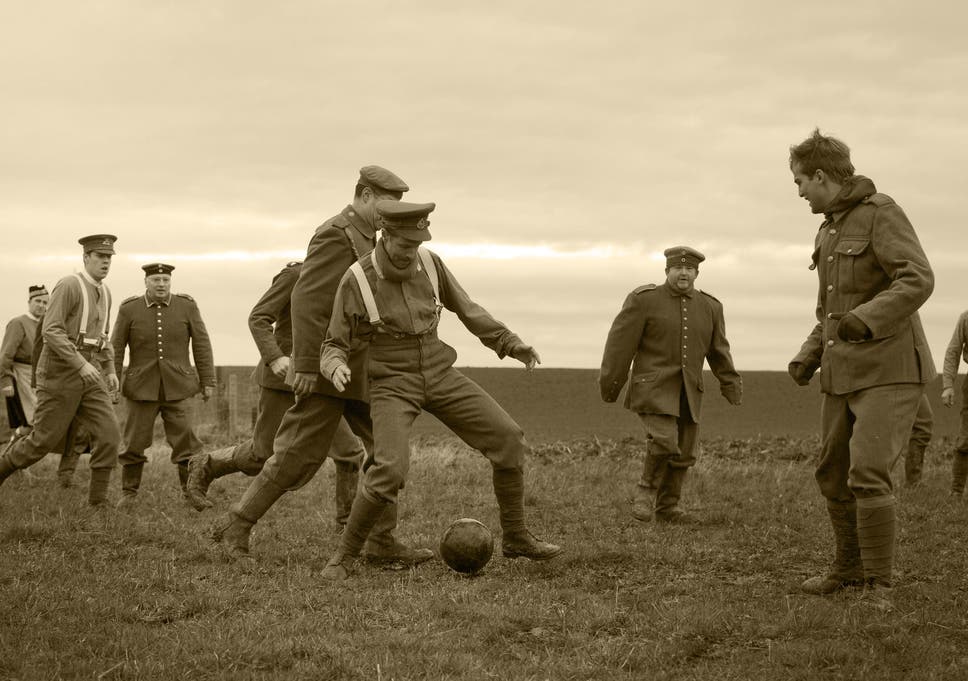
For those of you who don't know, on Christmas Day in 1914, soldiers on both sides decided to stop fighting and greet each other as friends. They sang carols and even played football together. Nothing like that has ever happened before or since but it stuck in our memories. There's a film all about it called Joyeux Noel that details the event as well as what happened after, it was made into a song called 'Snoopy's Christmas,' it has been referenced in TV (most notably, the 2017 Doctor Who Christmas special 'Twice Upon a Time') and of course, 100 years later, Sainsbury's honoured the event in their 2014 Christmas advert.

In my opinion, this is one of the greatest moments of humanity. Despite the fact that the world was at war with each other, everybody decided to stop for one day because it was right. And to be honest, it's a real shame that nothing like that has happened since. Granted, I get why it hasn't happened since. The soldiers got into major trouble with their superiors and I'd imagine things haven't changed in that respect.

But still, I think we can learn from this, even if we're not soldiers. What saddens me this year is that people have gotten a lot more hostile towards each other. Fandoms are ripping each other apart because of differing opinions, racism and homophobia are sadly still a thing, the white supremacist movement is worryingly getting noticed and whenever politics even gets mentioned, even the sanest person gets angry (even I've gotten righteously angry at times).

And yet soldiers who were forced to kill each other by squabbling politicians and commanders decided against that, even if it was for one day. I feel like we need to stop fighting and show some flipping human decency for once. Especially at Christmas. And we shouldn't have to get into trouble for doing so.

So what I want you guys to remember for this Christmas as well as 2019 onwards is this: no matter how bad things get, always try to be nice and never fail to be kind to each other. It'll make a world of difference. And I don't just mean on Christmas Day either. Because if soldiers from one of the biggest wars in history could do it, why can't we?

Image result for christmas truce 

That concludes this festive thought from an autistic mind. What do you think about this matter? Should we follow the example of the soldiers who took part of the WW1 Christmas Truce? Why/why not? Leave your thoughts below and be sure to follow my Facebook page 'Joel Mole' for more stuffs. Until the next time, fair thee well good people of the internet!

And have a merry Christmas!


Thursday, 5 July 2018

The Case for Sheldon Cooper (The Big Bang Theory)

For those of you who don't know, The Big Bang Theory is an American sitcom focusing on four scientists/geeks (Sheldon Cooper, Leonard Hofstadter, Raj Koothrapali and Howard Wolowitz) who gradually open up to relationships and street smarts as soon as women (Amy Farrah Fowler and Bernadette Rostenkowski) enter their lives, in particular, Sheldon and Leonard's new neighbour, Penny.

I like The Big Bang Theory despite its problems. Yes, the laugh track is obnoxious, there aren't that many jokes and it's clearly running on fumes at this point but when the jokes land, they do land, seasons 1-6 were genuinely fun and I'm invested in the characters (when the writers know what to do with them that is).

However, I do know that I am way more lenient to the show than most people who criticise it for being unfunny and a stereotypical portrayal of geek culture (failing to realise that people like the male characters on The Big Bang Theory do exist). One of the biggest points of contention centres around show's breakout character, Sheldon.

Sheldon has joined the ranks of Barney Stinson (How I Met Your Mother), Arnold Rimmer (Red Dwarf) and Maurice Moss (The IT Crowd) among the supporting characters in sitcoms that are more popular than the main protagonists. To be fair, it's hard not to see why. Jim Parsons puts on a great performance, the character is central to the funniest moments of the show and he's far more interesting than all the other characters.

Nevertheless, the character has faced criticism for being an at best stereotypical and at worst offensive portrayal of someone with autism/Asperger's syndrome. There is some validity to that particular criticism. The other characters are openly spiteful towards him, making many mean comments about his quirky behaviour and Sheldon himself is presented as rude and obnoxious (almost justifying the mean comments). Other than that though, I fail to see what is wrong with Sheldon as a representative of people in the spectrum.

Before I start my argument, I should probably mention that the writers never confirmed that Sheldon was autistic or had Asperger's, claiming that he was simply conceived with a unique personality. However, the actors have admitted that Sheldon exhibits some traits of the syndrome. For example, Sheldon has a strict adherence to routine, he hates change, he has savant syndrome (meaning that he is a prodigy in his particular topic, in this case, physics), he is immensely passionate about trivial things such as Star Trek, he (initially) has an aversion to physical contact and he struggles with social conventions. It's clear that, despite what the writers say, Sheldon does have something akin to autism/Asperger's so it's not like the critics are basing their complaints on nothing. However, I may have to respectfully disagree and say that while Sheldon may not be the best autistic character to be put on screen, he's still a decent portrayal.

For one thing, he's presented as a man with a successful life. He has a well-paying job as a respected theoretical physicist (even the late Stephen Hawking respected him), he has a lovely apartment, his friends, despite being frequently at odds with him, do appreciate and love him (especially Penny and Leonard), and he has a loving girlfriend who he eventually marries in the season 11 finale. He's not someone who is down on his luck nor is he someone we are manipulated into feeling sorry for. In fact, despite his unusual education (he went to college when he was 11), he had a pretty normal life.

He also has an affectionate side. He loves his mother and 'Meemaw' and he truly loves his girlfriend/wife Amy. In fact, one of the only good aspects of the current run of the show is how healthy and affectionate his relationship with Amy it's clear they made each other better. Amy has matured and Sheldon is less cold and more emotional. He even has affection for his friends as he has difficulty leaving behind Leonard because of how much the latter means to him. There's a brilliant scene in the season 8 episode 'The Space Probe Disintegration' where Sheldon and Leonard open up about how difficult it is to live with the former and Sheldon even thanks Leonard for putting up with him. Here's the clip (note, the title of the video is very misleading):


It's also clear that the likes of  Leonard and Penny do care for him in times of trouble, such as when Sheldon loses one of his childhood icons, Professor Proton, or even in general, such as the episode where Sheldon and Penny try a test designed to make each other fall in love (it doesn't work but they do grow closer as friends). Howard and Raj are less close to him but they stick around and have their moments of caring (e.g. Sheldon and Howard going to Texas together or Sheldon and Raj naming an asteroid together). Amy, of course, loves him dearly and even Bernadette starts to like him after he treats her pregnancy with respect. However, they don't simply put up with his shenanigans. They do tell him that he is being rude and condescending and he does stop after he understands what he's doing is wrong. Of course, he does still act condescending for comedic purposes (it is a sitcom after all) but it's clear that he never means to hurt anyone and the other characters put their foot down when he goes too far.

And honestly, that's happening less and less which leads me to my biggest reason as to why I think Sheldon is a decent portrayal of autism/Asperger's: he evolves. Granted he doesn't turn into a space fetus a la 2001: A Space Odyssey but he changes and evolves. He becomes more affectionate, he becomes more open to physical contact, he improves his relationships and the episodes where he acts completely off the rails happen less frequently. Granted his quirks are still there but even they are given legitimate reasons. For example, his 'knock, knock, knock, Penny' (x3) routine is seen as a funny quirk at first but is then given a tragic reason as it's revealed it was the result of Sheldon discovering his father's infidelity. That scene is taken seriously and it's a realistic portrayal of how an autistic child would deal with a traumatic incident.

The point is, he gradually matures over the course of the show and it's treated as a good thing. The episodes where Sheldon takes the next step with Amy are treated like events are usually the only interesting episodes in the show's current run. It's intentionally frustrating when Sheldon doesn't pay her much romantic attention but it is equally rewarding when he finally steps up and becomes a better boyfriend after she dumps him. The episode where Sheldon finally decides to lose his virginity to Amy is regarded as one of the best episodes of the show (to the point where it has become an annual event), Sheldon's engagement to Amy is treated as a massive cliffhanger and his marriage to Amy is given a much bigger fanfare than Leonard and Penny's relationship (which is the central relationship of the show). When Sheldon makes these decisions, the studio audience cheers and the other characters act delighted. And it's only when Sheldon realises that he makes mistakes does he decide to improve on them.

And honestly, that's a healthy way to approach people with autism. We are capable of learning social cues and changing our callous attitudes but we do need to be taught how. Now changes like that can't happen instantaneously so you have to be patient with us but it can be done. I know I changed to adapt to society better because my mum raised me to be a gentleman and a good man. But at the same time, autism can't be completely stopped. There are some symptoms or quirks that can't be changed and that's okay. They're what made Sheldon a popular character and it's what made us, us. But it's nice to see a show that says that you can change people for the better, even people with autism.

And to those people who criticise the depiction of autism/Asperger's in the show, I get it. Because the writers won't admit that Sheldon is autistic, the condition isn't explored as strongly (I'd recommend the Netflix show Atypical for that) but for what they do explore, it's not half bad. They make sure that Sheldon is likeable and interesting, they show that he does care about his friends and loved ones and they show a bold but important message in that just because someone is autistic, doesn't mean you have to take it when they act rude or condescending and that it is possible to teach them to be better people. Think of him as 'Autism for Beginners,' if you will.

So I implore you to give Sheldon Cooper and indeed The Big Bang Theory another shot, this time watching the show from beginning to end. There is a clear progression in the show, even if it does slow down in the later seasons and who knows? You might actually have fun watching it. And if you still don't like it, there's always The IT Crowd.


And that concludes this thought from an autistic mind. Did you agree? Disagree? What do you think of The Big Bang Theory? Is Sheldon a good character? Let me know in the comments below and be sure to share this around and like my Facebook page 'Joel Mole.' I'll see you next time but until then, fare thee well good people of the internet!

For those of you who think Sheldon isn't funny. He is... he really is... (from the season 2 episode 'The Griffin Equivalency')


Sunday, 24 June 2018

Black Mirror's White Bear, Crime and Punishment

WARNING! THIS POST CONTAINS MAJOR SPOILERS FOR THE BLACK MIRROR EPISODE 'WHITE BEAR.' IF YOU HAVEN'T WATCHED IT AND YOU CARE ABOUT SPOILERS, CLOSE THIS TAB AND WATCH THE EPISODE NOW! YOU HAVE BEEN WARNED! THE SPOILERS WILL BEGIN AFTER THIS PICTURE!

Introduction and Synopsis


In my time watching Black Mirror, I don't think I've ever been so stumped by an episode's message. Not because I didn't get it but because I had no idea who to side with. It really asks questions about whether the punishment fits the crime and whether or not criminals deserve a punishment that severe. I'm gonna attempt to find out who was the true villain in 'White Bear' by balancing their horrendous actions with what they're going through.

I should probably do a recap first to lay out the moral dilemma first. In the episode, a woman called Victoria Skillane (Lenora Crichlow) wakes up in a house with amnesia. She is being hunted by people in masks and everyone else is simply filming her via their phones. Another woman called Jem Tuppence Middleton) saves her and reveals that there was a signal known as 'white bear' that made most of the population 'observers' and the rest into homicidal maniacs. Only Victoria, Jem and another man called Damien (Ian Bonar) (who is killed by the masked people early on) are unaffected. Victoria and Jem soon meet another man called Baxter (Michael Smiley) who turns out to be a maniac to tries to torture and kill Victoria only for Jem to save her. 

They get to the white bear tower only to be attacked again. Victoria tries to shoot one of the maniacs only for the gun to be made of confetti. The walls part to reveal an audience and Baxter and Jem strap her to a chair. It turns out that Victoria was an accomplice to the abduction, torture and murder of a young girl. Her boyfriend carried out the murder but he committed suicide in prison. She filmed it so she is still guilty. The 'white bear' was actually a teddy the girl owned and it has become the name of a theme park. The park in question is Victoria's punishment: She is to have her memories wiped every day and she is put through a fictional scenario designed to terrify and traumatise her. Baxter, Jem and Damien (who is still alive) are a part of it whilst the onlookers are simply visitors to the park who are allowed to film the scenario without being allowed to interfere. 

Victoria is then paraded back to her house where her memories are wiped again as she is forced to watch the video of the girl's murder that she herself filmed. The episode ends with the routine starting again, this time from Baxter's point of view as he treats this as an amusement park designed for the enjoyment of men, women and children. 

So yeah... I'm in a bit of a pickle here. On the one hand, Victoria deserves some punishment for her heinous actions but on the other hand, the punishment itself seems too harsh. Gahhh my brain! I might as well look at it from two sides: Victoria and Baxter.

The Case for Victoria Skillane


The majority of the episode is from her point of view and thus we are as confused as she is. The reveal that she is a criminal is a plot twist and she is terrified for the entire time. She is, after all, a human being subjected to terrible things. Granted for a good reason (I'll get to that later) but she is helpless and afraid the whole time.

As for the punishment itself. I can see it being justified for one day but this has been going on for a while and will continue to go on after the episode is over. At some point, it becomes overkill. The other characters are just outright cruel to her and she is clearly remorseful for her actions... granted that's because she doesn't remember them but the constant memory wiping is perhaps the cruellest part of the punishment as the procedure is shown to be painful. The part that stuck to me the most were Victoria's screams as she was being tortured. She deserves punishment but nothing this severe. Especially as her boyfriend, who actually committed the murder, didn't suffer the same fate as he ended up in jail. At some point, she just becomes the victim.

The Case for Baxter and the White Bear Justice Park


Victoria Skillane aided and abetted a murder. She filmed the murder without doing anything to intervene and she is guilty of a serious crime. She deserves to be punished in some way and given how high profile this case was, it was likely that the people demanded justice for Victoria's actions, especially as the murderer took the coward's way out. The White Bear Justice Park is a chance for the people to exact justice for the girl's murder.

Baxter set this up presumably because he was especially angry at the girl's murder. This was opportunity for him to get closure and justice whilst also making a profit out of it for good measure. He set up White Bear as a memorial of sorts to the victim and punishing Victoria is a good way to honor her memory. His methods may  have been extreme but he believes that he is justified because he was punishing the wicked. Plus, he never caused serious harm to her as the guns never actually killed or hurt anyone. The only harm he caused her was the memory wipes and even then that was to stop her suspecting.

In his eyes, he is doing the right thing.

Verdict

I think what the episode is saying is that nobody's truly right in this scenario. Baxter may be punishing a criminal but he is doing so for his own enjoyment and is using a needlessly extreme scenario to do so. Victoria may be a victim but she deserved some form of punishment for doing a truly evil crime. They're both doing terrible things but at the same time, you understand their points of view.

I guess the biggest question 'White Bear' poses is this: At what point is this punishment enough?


And that concludes this thought from an autistic mind. Where do you stand on the debate? Do you side with Victoria or Baxter? And is there really a right answer? Let me know in the comments below and be sure to like my Facebook page 'Joel Mole' for more content! Until the next time, fair thee well good people of the internet!


Tuesday, 19 June 2018

Black Mirror's Hang the DJ and the Search for Perfect Love

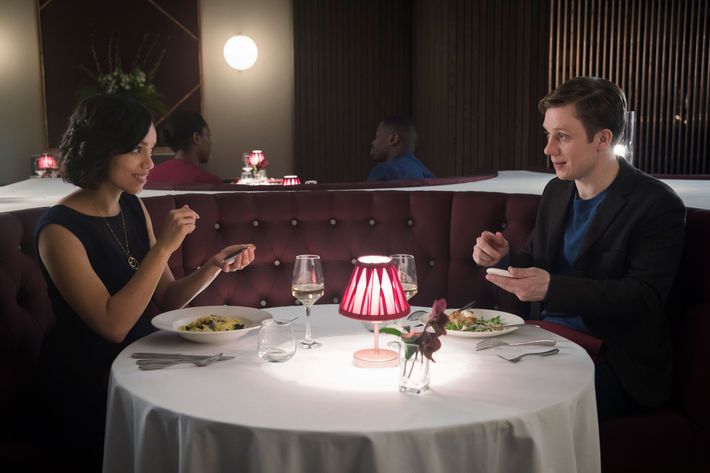
WARNING! THIS POST CONTAINS MAJOR SPOILERS FOR THE BLACK MIRROR EPISODE 'HANG THE DJ.' IF YOU HAVEN'T WATCHED IT AND YOU CARE ABOUT SPOILERS, CLOSE THIS TAB AND WATCH THE EPISODE NOW! YOU HAVE BEEN WARNED! THE SPOILERS WILL BEGIN AFTER THIS PICTURE!


I'm going to keep writing blogs about the sci-fi anthology thriller series Black Mirror but only when the themes and messages are strong and interesting enough to talk about. I'm not going to look at episodes such as 'San Junipero' because that's more of a straightforward love story set in a fascinating world with a simple message of 'love transcends everything.' 'Hang the DJ' on the other hand provides a more complex and detailed look on love. In particular, 'Hang the DJ' focuses on the search for 'the one' and how difficult that can be despite a system seemingly primed to solve that very problem. 

In the episode, we are introduced to a world dominated by a matchmaking device known as COACH that puts people in relationships and decides how long it will last. No matter how much or how little chemistry you have, you have to stay with them for as long as COACH deems necessary. Through analysing different relationships and one-night stands, COACH eventually finds the 'perfect match.' As the motto for COACH says: 'Everything happens for a reason.' 

The episode focuses on Frank (Joe Cole) and Amy (Georgina Campbell) as they are matched for 12 hours despite clearly falling in love with each other. They go their separate ways and get put into longer relationships with people they're clearly not meant for. Eventually COACH reunites them and they agree to not look at their expiry dates but Frank does so anyway without Amy and his relationship suffers as a result. Despite this, they still love each other even as they get paired with their perfect matches, they decide to defy the system and escape only to learn that they were a part of a simulation all along. 

The simulation itself presents 1000 scenarios where the potential matches are put in a scenario where they would either rebel or accept an illogical system. The more times they rebel, the higher the compatibility rating of their real-life counterpart. The episode ends with the real Frank and Amy meeting for the first time after the dating app the simulation was a part of matches them with a 99.8% compatibility rating.


So, wouldn't it be nice to have a system like COACH? I'm serious! A system that guarantees perfect love sounds like a dream come true to those like me who are struggling to even find a date, let alone 'the one.' Ideally the search for 'the one' should be a piece of cake (see every Disney princess film ever except for Moana and Brave but even then, that's because they're strong independent women). But real life isn't like that. We are not made to have dates that give us a fair chance to get to know each other. Those we consider 'the one' may not even be for us because of either work commitments, long distances and/or third parties who beat us to it. Dating apps aren't even reliable because those considered compatible make the choice not to do anything (or act like complete smegheads). 

In 'Hang the DJ,' there are less obstacles since the characters aren't shown to have any jobs and they all live in a single space meaning that they only have to worry about who COACH pairs them up with and they are free to spend time with their significant others.

Though to 'Hang the DJ's' credit, the 'system' isn't presented as perfect either. Frank and Amy go through several terrible relationships and one-night stands before they are given their perfect match (or in this case, before they find each other). Frank in particular has to endure a year long relationship with a bitter and rude woman whilst Amy goes through several one-night stands to the point where it burns her out. Even the dating app itself which the entire episode takes place in has to create simulations where the simulacra go through several difficult scenarios before it is ready to match their real-life counterparts. Heck, because it's real life, I doubt the road for Frank and Amy will be smooth sailing either. Love is complicated no matter what. 

I also think that this episode has some interesting commentary on what constitutes 'true love.' There's a memorable scene in the middle of the episode where Frank and Amy witness what COACH deemed a 'perfect couple' and they are rather put off by what they see because the relationship itself feels unnatural. I've never been in a relationship myself but I know enough about them to know that they're not perfect. Every couple fights, it's inevitable when two people stay together for so long. Even Frank and Amy have their fights but their love is still true because their love overpowers any differences. That, to me, is true love. True love isn't perfect but true lovers love each other despite their differences. In other words, they don't always get on but they love each other unconditionally. 

I think that's the ultimate message of 'Hang the DJ.' Love isn't perfect and it takes a while to find your true love but you'll find them eventually. There's even merit to the difficult experiences because they enable you to learn from the pros and cons of previous relationships to prepare you for 'the one.' As COACH says in the episode, 'everything happens for a reason.'


That concludes this thought from an autistic mind. What are your thoughts on true love and 'Hang the DJ?' Do you agree/disagree? Discuss in the comments below and be sure to like my Facebook page 'Joel Mole.' Thank you for taking your time to read this and thank you for your patience. Until the next time, fair thee well good people of the internet!

Image result for hang the dj


Tuesday, 12 June 2018

Black Mirror's Nosedive and the Dangers of Social Validation

WARNING! THIS POST CONTAINS MAJOR SPOILERS FOR THE BLACK MIRROR EPISODE 'NOSEDIVE.' IF YOU HAVEN'T WATCHED IT AND YOU CARE ABOUT SPOILERS, CLOSE THIS TAB AND WATCH THE EPISODE NOW! YOU HAVE BEEN WARNED! 

As of writing this post, I am easing myself into Charlie Brooker's sci-fi anthology series, Black Mirror. For those of you who don't know, Black Mirror, tells different stories in different settings, usually about how humanity would react to cutting edge technology. Usually, but not always, the show would get into some dark territories, hence why I'm easing myself into the series and I will say that it is NOT for everyone. From what I have seen though, the show is marvelous with its relevant themes, biting satire, clever writing and amazing actors. However, there was one episode that really stood out to me, that being the Season 3 premiere: 'Nosedive.'

'Nosedive' tells the story of Lacie Pound (played by Bryce Dallas Howard), a woman living in a society where people are constantly rated out of 5 stars. The higher the average score, the more privileges you get. Lacie, who averages at 4.2, is invited to a wedding attended by high fours, something which could boost her own rating big enough to get a new house. However, as the title suggests, her life takes a gigantic nosedive as one bad situation after another decreases her average score until she hits zero.

The opening 10 minutes of this episode is honestly terrifying to watch. We see Lacie's day-to-day life as she puts on a fake smile, which she practices in front of a mirror, in order to be liked by everyone. Everything about this sequence seems fake from the light colours (notice the pink tint) to the overly cheery attitudes which makes the whole thing seem off. Throughout the episode, Lacie tries very hard to be liked and nothing seems authentic. Even her own brother, a 3.8, claims not to recognise her anymore as she is always putting on a front. The only characters who feel natural are characters with a low rating because they generally don't care about their image and are happy with their lives.

There's a scene in the middle where Lacie meets the 1.4 truck driver and this is where the episode's moral comes front and centre. The driver is only like this because her cancer-ridden husband was denied access to a high-end hospital because his rating wasn't high enough. After his death, she decided to be honest with herself and though it made her a social pariah, she's the only character who's truly happy because she no longer cares what people think of her.

Then, at the end, Lacie gets a zero and sent to jail for causing a scene. She is deeply upset at first but then gets into an insult match with a fellow inmate and even though she is imprisoned, she is truly free to say what she wants without fear of backlash.

This got me thinking about the idea external social validation. In 'Nosedive's' society, your external image can change how you are able to live your life. You can only live in certain places if you're a 3.8 or higher, for example, and you can only board flights if you're a 4.2 or higher. It speaks a lot about how others' perception of you can change your lifestyle.

In a world dominated by social media, it seems as if people go out of the way to get likes by painting their lives as picturesque as possible. I see this often in Facebook and I presume that it's especially the case with Instagram (I don't have the latter so I wouldn't know). I'm a victim of this too. I constantly worry that my life doesn't seem that interesting since I don't have enough pictures of it and I often compare other people's profile pictures against my own to see who has more likes. It's always the worst seeing my Facebook friends go off on adventures and bragging about them when I have less to brag about. But at the same time, I'm probably the same as I often display my greater achievements on Facebook. Heck, I share my blogs around to get as many views as possible. I know I shouldn't worry about it but I do. I'm like Lacie, I care about what people think of me and I try presenting myself as a good man (which I believe I am) to get people to like me.

Because to be honest, external validation feels good. It feels great when someone tells you you're great and awesome. But if, like me, you're almost dependent on it to feel good about yourself, then it's honestly damaging because you're constantly worrying that people don't like you and cast you aside. This is especially true in competitive scenarios like competitions and pretty much everything to do with theatre. When I lose competitions or I don't get into plays I audition for, it makes me feel like I'm not good enough which is a really unhealthy way of thinking and probably untrue. It drives me to push my image into higher standards and if I end up like Lacie, that can do more harm to me than good.

I think that's why 'Nosedive' struck a chord with me more than any other Black Mirror episode I've seen (well except maybe 'Hang the DJ' but that's a whole other blog post) because we're dangerously close to that society. We do rate each other for our online activities and we maybe even subconsciously do the same with everyday life. If we all stop worrying about what people think of us then we would probably feel better about ourselves.

That concludes this thought from an autistic mind. Sorry I've been gone for so long but I tried to move this to a new site only to realise that the old format was fine. What are your thoughts on the matter? Do you agree/disagree? Discuss in the comments below and be sure to like my Facebook page 'Joel Mole.' Thank you for taking your time to read this and thank you for your patience. Until the next time, fair thee well good people of the internet!

Image result for black mirror nosedive


Sunday, 10 September 2017

Are Feminists and Social Justice Warriors (SJWs) Really Ruining Hollywood?

Oh boy I'm gonna open up a can of worms with this aren't I? Allow me to provide context: lately, Hollywood has been making strides into including women and people of differing races. For example, the Star Wars franchise, which only had one major female character and one black character per trilogy, now has predominantly female protagonists and more diverse casting. This by the way is awesome! There's still a long way to go but I'm glad that Hollywood is making the effort to be more inclusive.

There is however a trend that seems to be creeping in lately that certain people have taken issue with and that is gender swapping. I have mentioned the recent 'controversy' surrounding a female Doctor for Doctor Who but this isn't the only case. The recent Ghostbusters film had an all female cast as opposed to the all male cast of the original, several Marvel Comics characters have either changed genders or ethnicities (such as a black female Iron Man now called Iron Heart, an Asian Hulk, a Muslim Ms Marvel, a black Spider-Man AND a female Spider-Man called Spider-Gwen, a female Thor etc) and it has been announced that there will be an all female Lord of the Flies remake. This does raise an understandable issue as replacing male characters with female characters instead of creating new ones is a touch lazy and it implies that the only way for female characters to gain prominence is to take on male roles but that's not what some people take issue with. They claim that SJWs and 'feminazis' are ruining their favourite characters and franchises by changing the status quo. Heck even original female characters such as Rey from the new Star Wars films are getting criticised for 'intruding' popular previously male driven characters.

This puts me in a bit of a predicament as no matter who I side with, I will annoy certain people. I'm typically on the side of the SJWs because... well they mean well... why wouldn't they? They want justice and equality for all and I find that very admirable even if they get a bit preachy at times. The anti-SJW crowd annoys me more because I feel like they're just throwing the term around without knowing they mean. Now that my opinion's out there (and I'm hoping my followers are civil people) I should probably weigh in on this who increase in diversity.

As far as original characters are concerned, bring it on. We need more diversity in Hollywood and it's nice to see that actors of different genders and ethnicities finally getting work. In fact, we need more of this. Despite the fact that we finally have a good female driven superhero movie from DC, Wonder Woman, I've noticed that Disney and Marvel, despite churning out consistently strong films, has taken 11 years for them to finally give us a female driven superhero movie with Captain Marvel (and that's assuming it comes out in 2019).

Gender swapping is where it gets a bit tricky. The 2016 Ghostbusters film has taken a lot of flak for presenting an all female cast. Of course, it wasn't the only reason for the backlash with many taking issue with the fact that it was a reboot of a classic and the fact that it was poorly marketed didn't help either. I haven't seen this film at the time of writing as I myself thinks that the film doesn't look very good in terms of quality (I may be wrong, I need to see for myself) but the consensus seems to be 'eh' and that people have been worked up about nothing. I am confused as to why it was a reboot as it could've easily have worked as a sequel with the old cast passing the torch to the new cast similar to the new Star Wars movies but at the same time, there's nothing wrong with an all female cast since they are original characters after all with new and different personalities (I think, again I haven't seen the film). What does worry me is how they handle the male characters as I've heard they're all either idiots or evil. Look, I know that in the past, it was the other way around but come on! This isn't any better! Both male and female characters should get equal treatment when it comes to portrayal.

Case in point: Wonder Woman. Despite it being a girl power film with an island of all female Amazons and the main protagonist being tough and inspirational, the male protagonists get equal treatment being genuinely helpful throughout the film. Honestly, more films should do that! Feminism, for me, is the belief in total gender equality. No battle of the genders or 'us and them' mentalities, just equality and harmony. If what I hear about Ghostbusters' treatment of male characters is true, then I feel like it suffers from the same problems as male driven Hollywood movies only reversed.

Then again, female Ghostbusters is not a bad idea since... well... who doesn't want to bust ghosts? (Well me for starters but hey, no-one should be excluded from the issue). In fact gender swapping characters isn't too bad of an idea IF, and this is a very big IF, it doesn't betray what the original characters stand for. Though I'm all for a female Doctor since the character's an alien who's personality changes with each actor who plays him/her, I'm against the idea of a female James Bond. James Bond is the embodiment of masculinity. He drives expensive cars, wears tuxedos, gambles, drinks a lot of alcohol and, most crucially, is a massive womanizer. Making James Bond a woman (Jane Bond?) would take away the masculine fantasy that many men have (i.e. saving the world and sleeping with as many women as they want). I'm all for a strong female spy character that regularly assists James Bond but not Bond himself. A black Bond however, I'm more than okay with (#elbaforbond).

I guess what I'm trying to say here is that gender swapping is fine but Hollywood etc shouldn't go too mad with it. I'd much rather have new well-written female characters that Hollywood risking missing what makes those stories and characters work to begin with. I am worried that the female Lord of the Flies would change too much of the original story since there are inherent differences between males and females for it to be a direct adaptation and even if there wasn't and the story is still the same, why do it? What's the point?

The rise of diversity in film is an wonderful thing and neither feminists or SJWs are ruining Hollywood but Hollywood should be careful about implementing diversity at the expense of either reskinning the problem or even making too many changes to the source material.

And for those commentators from both sides of the arguments who are being nasty to the opposing side... just try to be civil with each other. I know that's apparently a difficult thing to do but just try. I don't care who's right, if you're being nasty then you're wrong in my eyes and you should fix that attitude.


Well I hope that was a fair and constructive argument. I might have to run and hide in case I annoy certain members of my followers but hopefully you lot will be nice to myself and others and I hope you won't send me hurtful or hateful comments at my general direction. I did the best I could with a topic as delicate as this. If you don't want to come after me with a pitchfork and torch then be sure to like my Facebook page 'Joel Mole' and to share this around any possible forms of social media. You can also leave ideas on what topics I should cover next time and until I do this again, fair the well good people of the internet!

Image result for marvel sjw

Monday, 17 July 2017

The Thirteenth Doctor: A Lesson on Dealing with Change

So on Sunday 16th July 2017, the BBC announced that Jodie Whittaker (Broadchurch, St Trinians, Attack the Block) would take over from Peter Capaldi as the titular role in the popular sci-fi series 'Doctor Who.' Though most of the fanbase (including myself) is okay with this, there is a very vocal minority voicing their displeasure at the notion that a woman is playing the Doctor for the first time (discounting Joanna Lumley from the spoof 'The Curse of Fatal Death'). 

There are many reasons for this, some understandable (the possibility of this turning into a gimmick), some downright horrifying (general sexism) and one that's very confusing. This particular argument states that the role of the Doctor has always been male and that this shouldn't change. Really? I mean I kind of get what they're saying. Each Doctor before her has been played by a white male actor (all of whom are brilliant) so a change in the status quo will be jarring. But here's the thing, this isn't the first time that 'Doctor Who' has changed its established status quo, which is demonstrated by two crucial changes in the show's history. 

A little background: In 1963, Sydney Newman initially pitched the show as an education show for children with the Doctor acting as a guide and the companions acting as audience surrogates. The time travel element was still there but the past and future settings would be used to teach kids about history and science respectively. He was also strongly against the idea of using 'BEMs' (Bug-Eyed Monsters). He also specifically wanted an old man as the Doctor since that would be most suitable for a mentor. The formula changed when Terry Nation wrote a script featuring the Daleks and though Newman hated it, producer Verity Lambert gave it a fair chance and, because there were no other scripts available, Newman reluctantly allowed it. The story, and the Daleks in particular, proved to be so successful that Newman revoked the no BEMs rule and soon, the show dropped the educational aspect to give a larger focus on the battling monsters angle. 

This change was vital to ensuring the show's popularity since the success of the Daleks pushed it to mainstream with other monsters such as the Cybermen and the Weeping Angels becoming just as iconic. 

The other change was the idea of regeneration. Originally, though the Doctor would be an alien, he would not change his face and William Hartnell would remain in the role. That changed when Hartnell got too ill to play the role. However, instead of outright cancelling the show for losing its main lead, Newman decided to introduced the idea of 'renewal' (later called regeneration) to ensure that the Doctor can be replaced should the actor choose to leave. As well as this, Hartnell's replacement, Patrick Troughton, decided to play the role differently, opting to play him as an eccentric uncle rather than Hartnell's grumpy grandfather. This ensured the show's longevity since the writers were allowed to explore the character in new and interesting ways so that when the show was at risk of going stale, they could always change the character.

The key word here is change. The show is very different to how it was originally with a new format, cast and crew but still retaining what made the original show so special. The Doctor is no different. The character has evolved from a patriarchal mentor with questionable morals to a hero who believes in gender neutral ideas such as equality, respect for others, kindness, resilience and doing the right thing no matter how hopeless the situation is. Even if the Doctor makes the wrong decisions, he is still justified in his actions..  A woman could embody these ideals just as easily as a man and if upcoming showrunner Chris Chibnall remembers to stay true to the Doctor's character, Jodie Whittaker could be a great Doctor.  On top of this, it has recently been established that the Doctor's people, the Time Lords, are gender fluid with characters such as the Master making the change from male to female and even back in the 80s, Sydney Newman was strongly considering replacing Colin Baker with a woman (though that request was declined leading to the casting of Sylvester McCoy)

Now, despite change being vital to the show's survival, I can understand those who are uncomfortable with Peter Capaldi leaving and being replaced with someone who appears to be completely different so let me recall the first time I experienced regeneration. 

The year was 2005 and I was watching Christopher Eccleston's final episode as the Doctor: 'The Parting of the Ways.' Though I was somewhat aware of other Doctors, I had no idea that Eccleston was leaving nor did I have a clue about the concept of regeneration so it came as a genuine shock to me when Eccleston suddenly changed into David Tennant. I was scared and confused. After all, I have been so used to the idea of one man playing the Doctor that the idea of the role being handed to a complete stranger was very jarring. As someone with autism, change is difficult to go through especially if I didn't know about it beforehand. Nevertheless, I really liked the show so I gave Tennant a chance and sure enough, he won me over and I even liked him more than Eccleston. Tennant's Doctor became my childhood hero and Doctor Who, as I've already mentioned, has changed my life and since then I was more familiar with the concept of regeneration. 

When Tennant announced that he was leaving though, I was even more skeptical that I was with Eccleston. After all, Tennant was a terrific Doctor and I had doubts about his replacement, Matt Smith's ability to fill his shoes. I wasn't the only one as many felt he was too young to take the role. But again, since I loved the show and Smith's debut series looked awesome, I checked him out anyway and though it took me longer to get used to Matt Smith, I thought he was a worthy successor to Tennant. Nowadays, it saddens me when I meet someone who never watched 'Doctor Who' past David Tennant as Matt Smith was great in his own right. It was at this point where regeneration became less scary and more exciting as it allowed me the opportunity to speculate as to who would take on the role and, as I got more familiar with the other Doctors, I was confident that whoever the BBC would be excellent. 

When Matt Smith announced that he was leaving, I was sad but also excited as to who could replace him and sure enough, when Peter Capaldi was announced as the 12th Doctor, I was pleased though others were skeptical because they felt he was too old (ironic since William Hartnell was the same age as Capaldi when he first started). It was around this time where a female Doctor became a possibility and to be honest, I didn't want that to happen. The concept of gender-fluid regeneration wasn't firmly established at the time so I was convinced that this wasn't a good idea. However, when Missy was introduced and revealed to be the Master (a typically male character), I warmed up the idea of a female Doctor to the point where my current top choice, Hayley Atwell, is female. So when Jodie Whittaker was announced as the 13th Doctor, I was happy despite the fact that I have only heard of her this weekend. And now? I'm waiting to see what Whittaker and Chris Chibnall has to offer and Broadchurch is now a must buy. 

The point of this anecdote is that no matter who they cast and no matter how different the Doctor appears to be, the Doctor is still the Doctor and I can guarantee you that you would be upset when she leaves. 

So yes, a female Doctor is unheard of but it's not out of place with the show's ideology. Change is important as it potentially allows for better things to happen. We would still be in the stone age if not for change. 'Doctor Who' and its 12 actors are a shining example of how good change can be since it demonstrates that change can make a struggling TV show into a worldwide phenomenon. So long as you understand the importance of change, then the idea of a female Doctor won't seem so scary. 

Good luck Jodie Whittaker and Chris Chibnall. Here's hoping that you two will pull it off spectacularly. 


That concludes this thought from an autistic mind. What do you think of this new development in Doctor Who? Do you agree with my statements about change? Do you think Jodie Whittaker is a good choice? Why/Why not? Leave your thoughts in the comments below (And please be civil! I can't abide sexism and the social media side of 'Doctor Who' is already depressing me). Please give this post a share, like my Facebook page 'Joel Mole' and leave any suggestions on what topics you want me to cover next. Until then, fare thee well good people of the internet!


Sunday, 14 May 2017

Defining My Weirdness: How I Fit Into the Characteristics of Autism (Autism Awareness Special)

Sooooo this is a bit late. I had intended to do 2017's Autism Awareness Special with a case study on Sheldon Cooper from 'The Big Bang Theory' but there's hundreds of episodes worth of examples and I honestly can't sift through them all to find them so that's on permanent hiatus until further notice. Instead, I thought I'd try out something different for my belated Autism Awareness Special.

I thought I'd try listing all known characteristics of autism and I'll see if I fit into them. The point of this is three-fold:

1) This will hopefully explain my somewhat unusual quirks to those of you readers that have had the pleasure of knowing me personally

2) It'll hopefully teach you on well-known characteristics of autism

3) If I don't fit with all of these, it'll be proof that no two autistic people are the same and some characteristics will be more prominent in some people than others

I've decided to take the list from the Rocky Point Academy website (Link below the article) as it is the longest one, thus creating a stronger list. If any of these are inaccurate, sound off in the comments below.

Without further ado, here we go!


  1. Very little or no eye contact - If there's one thing I don't know about most of my friends is their eye colour. Try as I might, I seem unable to look into people's eyes for more than a second. Sometimes this gets to the point where I don't remember their faces after a first encounter.
  2. Resistance to being held or touched - At first but I'm more open to it lately. Initiating physical contact is another thing entirely since I feel I have to get others' permission first.
  3. Tends to get too close when speaking to someone (lack of personal space) - I have a huge sense of personal space and I don't like people getting too close (whether or not this applies to relationships remains to be seen)
  4. Responds to social interactions but does not initiate them - Very mixed actually.  On the whole, I'm bad at both initiating conversations and responding to them. However, if it's a topic I'm actively interested in, I will respond and initiate.
  5. Does not share observations or experiences with others - I honestly can't think of an example that either confirms or denies this. Those of you who know me well will hopefully do this for me.
  6. Difficulty in understanding jokes, figure of speech or sarcasm - I have managed to understand all three in some capacity though idioms have been a problem in the past. Banter is the one thing I have yet to understand.
  7. Difficulty in understand body language and facial expressions - Problem in the past but I understand the basic emotions. More complex emotions are tricky (I am yet to understand, for example, if someone is interested in me romantically though I have a feeling that's a problem with most men)
  8. Difficulty in understand the rules of conversation - Definitely! Small talk in particular is a hard one to do. I've only mastered conversations in geeky stuff or stuff I have vast knowledge in but gossip and other conversation conventions are tricky to me.
  9. Difficulty understanding group interactions - Unsure. I love group interactions but I often feel left out of them through my lack of social interaction and large amounts of daydreaming. To be honest, I don't understand what they mean here.
  10. Aversion to answering question about themselves - Only if I have no idea how to answer it. Ironically, it's questions about my autism I have the most difficulty answering.
  11. Gives spontaneous comments which seem to have no connection to the current conversation - This has lead to some amusingly awkward moments between myself and my peers. This is what happens when one is unable to track conversations properly.
  12. Makes honest but inappropriate observations - Yes and I often dig myself a whole trying to rectify this. 
  13. Seems unable to understand another's feelings - I find this more common with women but again, it seems that most men are naive about that. They even did a funny Family Guy sketch on it (Men! We don't know what we did!)
  14. Prefers to be alone, aloof or overly friendly - Depends on my mood. Sometimes I want to be alone and sometimes I crave a social situation. It's a funny old brain this.
  15. Difficulty maintaining friendships - Making friends is very difficult and maintaining them can be difficult as I tend to lose touch with them out of anxiety.
  16. Finds it easier to socialize with older and younger people rather than peers my own age - Actually yes. I do prefer interacting with adults than teenagers though children stress me out after a while.
  17. Unaware of/disinterested in everything around me - The first one applies more as I tend to daydream (a lot!)
  18. Talks excessively about one or two topics - Dunununun dunununun dunununun, OOOOOWEEEEEOOOOOOO! (That was the Doctor Who theme for those who thought I have temporarily gone insane)
  19. Overly trusting or unable to read behind the people's motives on actions - Depends on how well I know them. If I know them well, it's the former. If I barely know them or not at all, it's the latter.
  20. Minimal acknowledgement of others - I feel like I'm repeating myself here but yes that does often happen. 
  21. Abnormal use of pitch, intonation, rhythm or stress whilst speaking - Unsure. I might need to check with others for that. It sometimes feels weird with the pitch and tone but other than that, haven't the foggiest.
  22. Speech is abnormally loud or quiet - I have been told I should become a thespian actor because of my naturally loud voice
  23. Difficulty whispering - Actually yes. My whispering is often as loud as my voice
  24. Repeats last words or phrases several times. Makes verbal sounds whilst listening (echolalia) - Sounds right to me. I can't help it, it just happens.
  25. Often uses short incomplete sentences - I think you can tell by some of the short sentences in this article. I do tend to waffle at times but I like using short incomplete sentences. It makes it snappy, you know.
  26. Pronouns are inappropriately used - I do use 'one' as a pronoun even though it's rarely used anymore. Does that count?
  27. May have a high vocabulary - I highly approve of this particular symptom. It demonstrates how one can be sufficiently articulated in their speech patterns and writing styles. (Yes I have a reasonably high vocabulary)
  28. Uses a person's name excessively when speaking to them - At times. I also say please twice in one sentence (Can I please have this please?)
  29. Speech started very early then stopped for a period of time - Nope! I was a late bloomer. I couldn't speak until I was around 3 (though I'm given to understand that it's a common symptom. It might pop up later).
  30. Difficulty understanding directional terms - I know my lefts and rights thank you very much.
  31. Obsession with objects, ideas and desires - Again, Doctor Who. But I'm also obsessed Star Wars, music and romance (the latter files under desires I believe). 
  32. Fascination with rotation - Part of my fiddling habits (stimming). I do like rotating things a lot.
  33. Play is often repetitive - I'm an adult so play is now minimal but as a child, I often played out my own Doctor Who ideas with figures repeatedly (some of which I have since developed into actual story ideas).
  34. Many and varied collections - When one is a geek, one tends to collect things. 
  35. Unusual attachments to objects - If there's one thing I will never get rid of is my star teddy. 
  36. Quotes movies or video games - Again, Doctor Who and Star Wars. I quote them when the situation almost demands it.
  37. Difficulty transferring skills from one area to another - The only time where I know this applies is memory. I have a very selective memory since I remember some things really well and forget things in other subjects or in general.
  38. Perfectionism in some areas - Holy TARDIS of Gallifrey are some of these worded poorly?! I think it means a strict adherance to routine. If my routine or plan is disrupted, I will get distressed. I think this also applies to my habit of making lists but that feels irrelevant 
  39. Frustration expressed in unusual ways - I tend to scream in anger if that answers that question
  40. Feels the need to fix or rearrange things - One particular area where this annoys me is book and DVD order. I have to put them in chronological order or else they will make no sense.
  41. Transitioning from one activity to another is difficult - Not sure. The only time this question makes sense is that I'm great in some subjects but terrible in others.
  42. Difficulty attending to some tasks - I find this applies to practical tasks since the amount of instructions overwhelm me. This includes cooking and science experiments.
  43. Gross motor skills are developmentally behind peers - I can't drive/ride anything with wheels and I completely such at sports. The only one I am good at is walking. I'm a fast walker.
  44. Fine motor skills are developmentally behind peers - I thought that was to do with hypotonia (weak muscle tone which I have also been diagnosed with). Regardless, I can't tie shoelaces (no matter how many times I try), I can't cut straight with scissors, my wrapping skills are appalling and even I can't read my handwriting.
  45. Inability to perceive dangerous situations - Depends on how alert I am. If I'm in my own little world then no. If I'm panicking then yes, too much.
  46. Extreme phobia/fears for no apparent reason - Loud noises and dolls of any kind spring to mind.
  47. Verbal outbursts - I think so? I'm not sure.
  48. Unexpected movements - I do randomly do things when I feel like it but I also stick to a routine so I can be fairly predictable, 
  49. Difficulty sensing time - I'm awful without a nearby clock/watch. I have no idea how fast or slow something is
  50. Difficulty waiting their turn (such as in line) - I am rather impatient, especially when I'm time constrained.
  51. Causes injury to self - Don't worry, I'm too scared of pain for that. The only exception is smacking my head or lightly banging my head against the wall whenever myself or someone else says or does something stupid. I can't abide stupidity.
  52. Walks on toes - Only to reach something though I might do it subconsciously
  53. Unusual gait - Fun fact: I had to look up what that means! Apparently it means funny walks. Yes I do walk in unusual ways including C-3PO when trying to get through crowds. 
  54. Difficulty changing from one floor surface to another (carpet to wood, pavement to grass) - Not anymore. Apparently that used to be a problem with grass but nowadays, I love being barefoot on grass. 
  55. Odd or unnatural posture - I think I'm somewhat hunched but honestly, I don't know because I haven't bothered to compare myself with someone with natural posture
  56. Difficulty moving through space (bumps into objects and people) - Not a major problem but I have bumped into people in the past. Especially the tighter the space.
  57. Walks without swinging arms freely - I'm the opposite. I'm a swinger (wait...)
  58. Incontinence of bowels or bladder - My bowels are very much in control thank you very much
  59. Constipation - Oh boy... only happens due to lack of fibre
  60. Frequent gas - I'm flatulent yest but not Thunderpants levels. I'm getting uncomfortable with bowel questions, can we move on?
  61. Appearance of hearing problems, but hearing has been checked and is now fine - Yes. I am unable to hear people at times with multiple incidents of me saying 'pardon?'
  62. Seizure activity - None that I know of. The closest I fit to that is twitching 
  63. Irregular sleeping patterns - Sometimes I sleep like a log. Others I can't sleep at all. You can tell I prefer the former.
  64. Apparent lack of concern for personal hygiene - Less concern than others but I do have a concern for my hygiene! I'm not a neanderthal.

Aaaaaand that's it. Boy was that a long list. I do hope this isn't overwhelming for you guys but I hope this gives you a better insight towards my behaviour and the behaviour of people on the spectrum. If there are any that I've missed, sound off below and I will tell you if I adhere to them or not. 

Also, due to the fact that I don't follow all of these, this will hopefully demonstrate that not everyone on the spectrum follows all of these. There will be some things that I follow and other people on the spectrum don't and vice versa. I'm not the definitive article of autism!


Anywho, that concludes this Thought from an Autistic Mind. What did you think of this list? Is it accurate? Are there any that I've missed? What characteristics do you or people on the spectrum follow on this list? Sound off in the comments below and be sure to like my Facebook page 'Joel Mole.' Stay tuned for more posts in the future but until then, fair thee well good people of the internet!


Image result for autistic traits
Others that I've missed: I do laugh nervously, I am sensitive to pain, I do have difficulty in asking for help or needs, I am very sensitive to sound and I want things to stay the same dagnabbit!